

Roll Your Own Tobacco Storage: 9 Practical Care Tips
October 1, 2026Roll your own tobacco comes with a vocabulary that can be surprisingly confusing. A conversation may move from loose tobacco to papers, tubes, filters, blends, and injectors as though every term describes the same thing. It does not. Some words identify a material, others describe a component, and others refer to equipment or a manufacturing category. Understanding those distinctions helps adults interpret information about products they already encounter without relying on assumptions. It also makes it easier to recognize when a statement is a physical description, an informal nickname, or a health claim that requires much stronger evidence than a package design or a personal recommendation.
This guide answers nine common questions about terminology and product information. The FDA describes roll-your-own tobacco as loose tobacco placed inside rolling paper and burned. It is a combustible tobacco product, and the FDA states that it is not safer than other cigarettes. That distinction is important throughout this discussion: learning what a component does is different from establishing that smoking it is safe. With that foundation, the terms become easier to separate and the claims surrounding them become easier to evaluate.
1. What Does Roll Your Own Tobacco Mean?
In everyday conversation, roll your own tobacco usually refers to loose tobacco associated with making cigarettes rather than tobacco already enclosed in a factory-made cigarette. RYO is a common abbreviation for the phrase. The tobacco is the material, while the paper, filter, and equipment are separate items that may be discussed alongside it. When someone uses RYO to describe an entire group of supplies, the intended meaning depends on the conversation. Ask which item they mean before assuming that a comment about tobacco also applies to a paper product or a piece of equipment. A shared abbreviation can be convenient without being a complete product description.
A useful way to read any explanation is to identify its subject first. Is the writer talking about the loose material, the finished cigarette, or a component used with it? An observation about the shape of paper cannot establish the composition of the tobacco, and a statement about equipment cannot establish a finished cigarette’s health risks. Keeping the subject clear prevents several common misunderstandings. It also helps when reading an instruction or report, because you can distinguish the thing being described from the other items involved. Clear terminology is especially valuable when an article moves between broad category names and individual parts without explicitly announcing the change.
2. Are Rolling Papers and Cigarette Tubes the Same Thing?
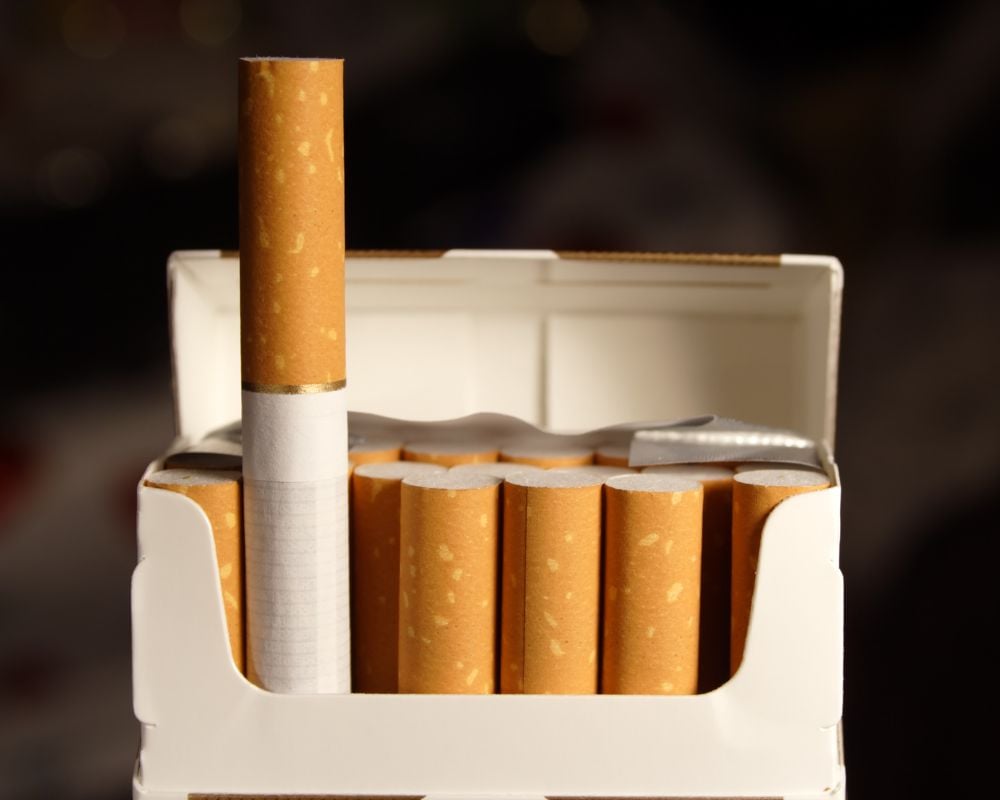
Rolling papers and cigarette tubes both involve paper, but their forms are different. A rolling paper is a sheet, while a cigarette tube is a preformed hollow paper cylinder. A filtered tube includes a filter as part of that structure. The FDA publishes product records that distinguish filtered cigarette tubes from tobacco filler, illustrating that these are separate components rather than interchangeable names for one item. Neither paper form tells you everything about the tobacco associated with it. A photograph of a tube may show its shape clearly while providing very little information about the material that would be placed inside it or the characteristics of a finished cigarette.
This distinction is useful when you interpret a label or a discussion of equipment compatibility. A statement about a paper’s dimensions is not automatically a statement about a tube, even when both are described with a familiar size term. Read the complete description rather than relying on a category nickname. If a question concerns a particular component already in your possession, preserve its original packaging so its identity remains clear. Avoid inferring exact specifications from a photograph or an approximate measurement on a screen. The broader principle is simple: the material, the shape, and the finished product are different kinds of information and should be evaluated separately.
3. What Is the Difference Between a Filter and a Tip?
Filter and tip are words people may use loosely, but they do not always identify the same structure. In some contexts, tip refers to the mouth end of a cigarette; in others, it refers to a separate component associated with a paper. A cigarette filter is a specific component, not simply any material located at that end. The FDA’s cigarette overview identifies tobacco, additives, a filter, and paper wrapping among the basic components of most cigarettes. When reading a product description, establish whether the word identifies a location, a structural piece, or an actual filter before drawing conclusions about its function.
The presence of a filter should not be interpreted as proof that a cigarette is safe. Appearance cannot tell you what a person will inhale, and a descriptive term does not establish a reduction in disease risk. The National Cancer Institute’s information about light cigarettes explains why seemingly reassuring product characteristics and machine measurements can be misleading. This is a good example of the difference between describing a component and evaluating health effects. An adult can understand what a filter is while still recognizing that the finished combustible product carries serious risks that the component’s name does not eliminate.
4. Why Do People Say RYO, MYO, Roller, and Injector?
RYO commonly abbreviates roll your own, while MYO is often used informally for make your own. In everyday discussions, people may use those phrases to distinguish methods or may use them broadly for the same general category. A roller and an injector are also different equipment terms. A roller is associated with forming a paper around material, while an injector is associated with filling a preformed tube. These explanations identify the general terminology rather than providing operating instructions. An equipment name alone does not establish the compatible materials, intended dimensions, cleaning method, or precautions for any specific model.
If you already own equipment, its model-specific manual is the appropriate source for those details. Do not transfer a setting, maintenance instruction, or component recommendation from one device simply because another device is also called an injector. Hawkmatic’s published model guidance, for example, addresses the features and handling concerns of its own equipment. The important reading habit is to separate general category explanations from instructions tied to a particular device. A glossary can tell you what a word means, but it cannot replace the documentation that explains what the item in front of you was designed to do.

5. What Do Cut, Blend, and Moisture Describe?
Cut, blend, and moisture refer to different characteristics of loose material. Cut describes its physical form, including how the pieces are shaped. Blend describes the combination of tobaccos identified by the manufacturer. Moisture concerns the material’s condition rather than its basic identity. These terms may appear in the same conversation, but changing one does not automatically answer a question about the others. For instance, a description of fine pieces does not establish which tobaccos are present. Similarly, a comment about texture does not establish a chemical profile. Read each characteristic as a separate piece of information rather than treating several adjectives as a complete technical explanation.
This separation matters when someone makes an unsupported leap from a visible feature to a larger conclusion. You might be able to observe that material looks different from another sample, but that observation does not tell you how the two compare in nicotine delivery or health risk. It also does not establish whether either sample is suitable for a particular piece of equipment. Those are separate questions requiring their own evidence or applicable instructions. Precise descriptions are useful because they narrow the question. They become misleading when a simple physical observation is presented as though it answers every question about the finished product.
6. Do Natural, Organic, or Additive-Free Mean Safer?
Natural, organic, and additive-free are not substitutes for evidence about the health effects of smoking. A term may describe an aspect of agriculture or manufacturing without establishing what happens when tobacco is burned and smoke is inhaled. The FDA’s explanation of chemicals in the tobacco plant shows why the absence of a particular added ingredient does not mean the absence of harmful chemicals. Tobacco can contain harmful substances before a finished cigarette is assembled, and burning creates additional hazards. The relevant question is therefore much broader than whether a package uses reassuring language about the source of its ingredients.
A useful test is to ask what the claim actually says and what you are adding to it in your own interpretation. Additive-free and harmless are different claims. A description of growing practices and a claim of lower disease risk are also different. If a message invites you to connect those ideas without providing appropriate evidence, pause before accepting the connection. The same care applies to roll your own tobacco as to factory-made cigarettes. Words associated with food, gardening, or minimally processed products do not become evidence of safety merely because they appear in a tobacco discussion. Keep a factual manufacturing description separate from an implied medical conclusion.
7. Does a Mild Taste Tell You How Much Nicotine Is Present?
Taste, perceived harshness, nicotine content, and nicotine delivery are different concepts. A person’s sensory impression does not provide a reliable numerical measurement of the nicotine in a material or the amount delivered during smoking. Personal descriptions such as smooth or strong may reflect an experience, but they are not standardized laboratory results. Someone else’s impression also does not establish how a different person will respond. When discussing roll your own tobacco, keep subjective descriptions in their proper category. They can communicate what a person thinks something tastes or feels like, but they cannot support a precise statement about exposure or dependence.
The distinction is particularly important when an informal review assigns health meaning to a sensory word. A mild description does not establish lower risk, just as a strong description does not quantify nicotine. Avoid treating a taste comparison as a substitute for product-specific evidence. Also be cautious about measurements that are presented without explaining the method or what was measured. A figure for the amount in tobacco is not automatically the same as a figure for smoke delivery or actual human exposure. Asking which quantity is being discussed is often enough to reveal that two apparently competing statements are actually describing different things.
8. Is Pipe Tobacco Just Another Name for Roll Your Own Tobacco?
Pipe tobacco and roll-your-own tobacco are separately defined categories in federal tobacco tax law. The Alcohol and Tobacco Tax and Trade Bureau’s product definitions explain those classifications using factors that include appearance, type, packaging, and labeling. A shared characteristic such as being loose tobacco does not erase the distinction. Nor should an informal comment about similar-looking contents be treated as a legal classification. The label is relevant information, and a category’s regulatory meaning may be more specific than the casual way people use the same words in conversation.
This is an example of why an adult glossary should distinguish ordinary language from formal definitions. In an everyday discussion, someone may group several loose materials together for convenience. A manufacturer, regulator, or instruction manual may need to distinguish them carefully. When the distinction matters, consult the actual definition or instructions rather than substituting an assumption. Do not treat a label from one product as permission to disregard the intended use or requirements of another. Understanding the terminology does not require making a tax or legal judgment yourself. It requires recognizing when a question belongs with an official source instead of an informal nickname.
9. How Can You Tell a Useful Description From an Unsupported Claim?
Begin by identifying the type of statement. A description of dimensions is different from a maintenance instruction, which is different from a claim about health effects. Then ask whether the source is appropriate to the statement. A manufacturer can supply specifications for its own equipment, while an official health resource can explain established tobacco risks. A personal review may describe someone’s experience but cannot establish a general medical conclusion. Finally, look for the connection between the evidence and the claim. A source describing paper dimensions does not support a conclusion about safety simply because both appear in the same article.
Keep the complete wording and context when evaluating information. A cropped photograph, a remembered sentence, or a short excerpt may leave out the qualification that makes the original statement understandable. If a claim depends on a comparison, ask what is being compared and whether the terms are defined consistently. This approach is useful far beyond tobacco, but it is particularly valuable in a category where physical descriptions and health implications can easily become mixed together. Clear information tells you what is known, how it is known, and which question it answers. Unsupported messaging often skips those connections and asks you to supply them yourself.

Reading Roll Your Own Tobacco Information in Context
Consider a description that combines a loose material, a filtered tube, and a machine in one sentence. It may sound comprehensive because several familiar terms are present. In reality, each item raises a different set of questions. The material has its own identity and labeling, the tube has a structure and dimensions, and the equipment has model-specific instructions. The finished cigarette raises separate health questions. Reading the sentence accurately means keeping those subjects distinct. You do not need to become a technical expert to do that; you need to resist the temptation to let one familiar word stand in for information that has not actually been provided.
The same principle applies when two sources appear to disagree. One person may use RYO to refer narrowly to hand-rolled cigarettes, while another uses it as a broad category that includes tube-based products. Before deciding which person is correct, identify the definition each is using. A disagreement about vocabulary may be resolved by clarifying the subject, while a disagreement about a factual claim may require better evidence. This simple distinction makes conversations more productive. Instead of repeating a broad question, you can ask whether the discussion concerns tobacco, paper, a filter, a device, or the effects of smoking the finished product.
A Clearer Way to Understand the Category
The most useful takeaway is that roll your own tobacco is a category surrounded by several related but distinct ideas. Loose material is different from its wrapper. A filter is different from an informal reference to a tip. A device category is different from a specific model’s instructions. A sensory description is different from a chemical measurement, and a manufacturing claim is different from evidence of reduced health risk. Keeping those distinctions visible makes information easier to evaluate and reduces the chance that an ordinary descriptive word will be interpreted as a promise it cannot support.
For readers of Ciggys for Less, this vocabulary guide provides a starting point for making sense of terminology that can otherwise blur together. Return to the complete package information and appropriate manufacturer documentation when the question involves an item you already own, and use authoritative public-health resources for health questions. Roll your own tobacco remains a combustible tobacco product regardless of the terminology used around it. Clear definitions help adults read information more accurately, recognize unsupported claims, and keep the physical description of a product separate from conclusions about what it means for their health.

Ciggys4Less Media Team by Nethe.rs Web Design


